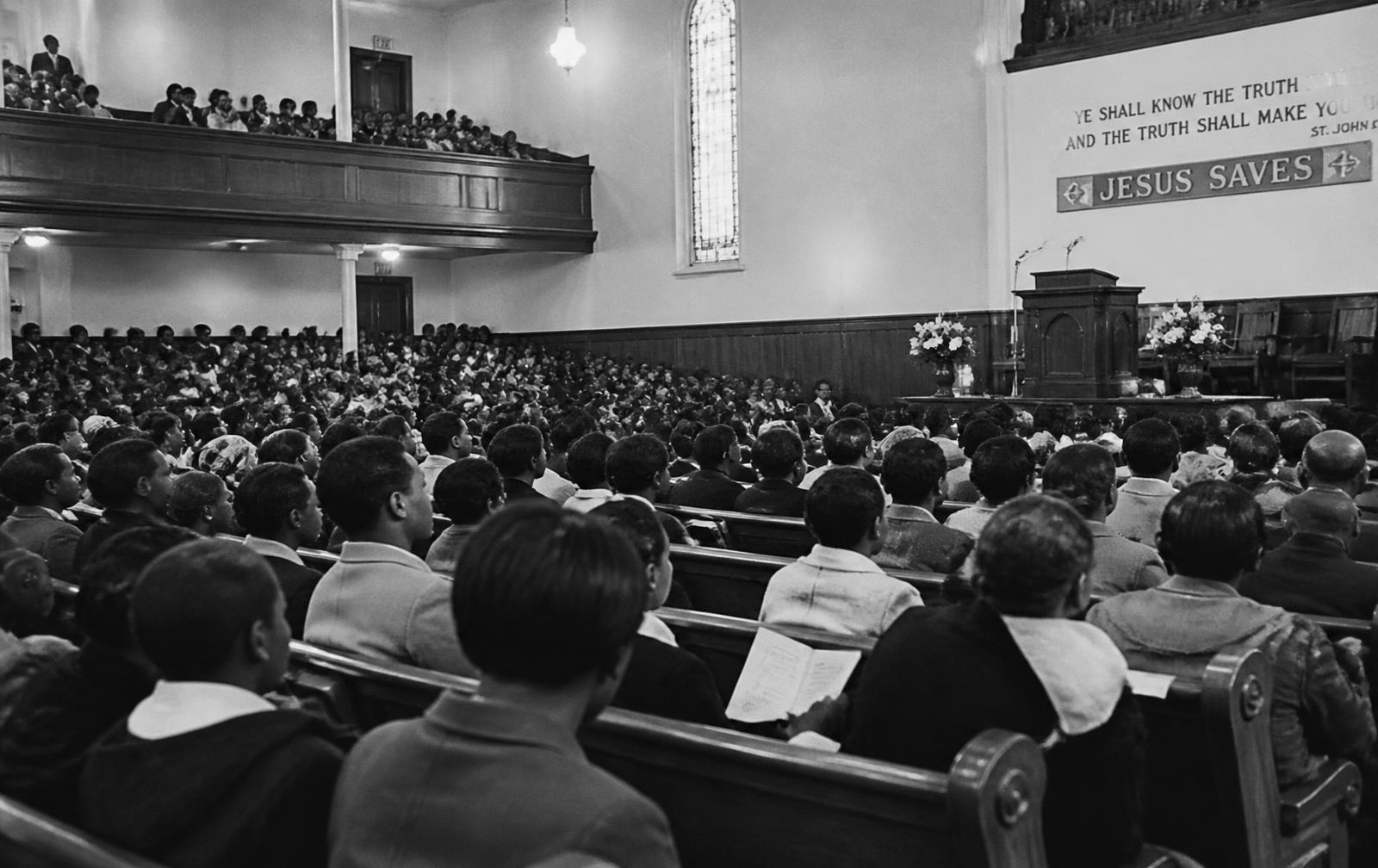
March 1968
A Voice for the Poor Came to Waycross
Dr. Martin Luther King Jr. at Greater Mt. Zion
The Visit
Why Dr. King came to Waycross
In the final weeks of his life, Dr. Martin Luther King Jr. traveled across the South carrying the message of the Poor People’s Campaign — a national effort to confront poverty, hunger, unemployment, and housing as matters of moral urgency.
That work brought him to Waycross, Georgia in March 1968. Documentation held by the National Archives records that arrangements were made for Mt. Zion A.M.E. Church to be made available for his address, and preserves eyewitness accounts of the speech, including an estimated audience of 200–250 people. A separate archival catalog record identifies the March 1968 Waycross speech as having been delivered at Greater Mt. Zion A.M.E. Church.
Within two weeks of that evening, Dr. King was killed in Memphis. What was said in this sanctuary belongs to the last chapter of his public life.
Chronology
Two weeks in the spring of 1968
March 21, 1968
Arrangements are made for Dr. King's Waycross appearance.
March 23, 1968
Dr. King arrives at Waycross Airport.
Mt. Zion A.M.E. Church
Dr. King addresses approximately 200–250 people, according to contemporary federal reporting.
April 4, 1968
Dr. King is assassinated in Memphis, Tennessee.
Today
Greater Mt. Zion and the Waycross community continue to preserve the memory and meaning of that visit.
The Record
What the archive holds, and what we are still gathering
Documents
- National Archives federal reporting
- Archival catalog records
- Newspaper coverage
- Church minutes and bulletins
Those Who Were There
- Eyewitness recollections
- Recorded oral histories
- Family photographs
- Community leaders of the era
The Waycross Movement
- Local organizing and mass meetings
- Voter registration work
- The Greater Mt. Zion connection
- The BHEC memorial plaque
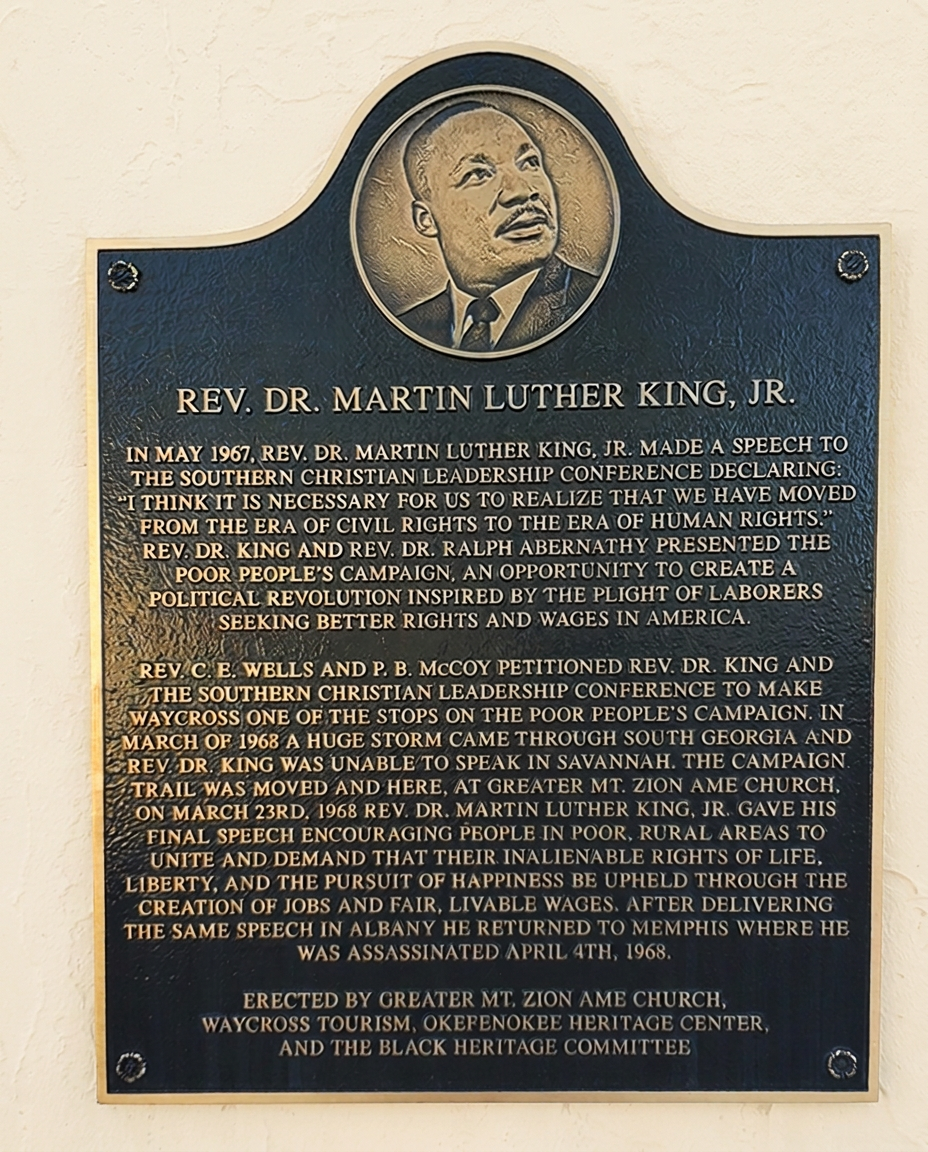
Remembering the Visit
A plaque on this wall marks what happened here.
The memorial plaque installed by the OHC Black Heritage Exhibit Committee, and cared for under the leadership of Pastor, Rheunnette Haire, honors Dr. King’s visit. If you were present that evening, or your family kept a memory, a photograph, or a clipping, the church archive would be honored to receive it.
Greater Mt. Zion is a proud member of the Okefenokee Heritage Center Museum, Black Heritage Exhibit Committee (BHEC).